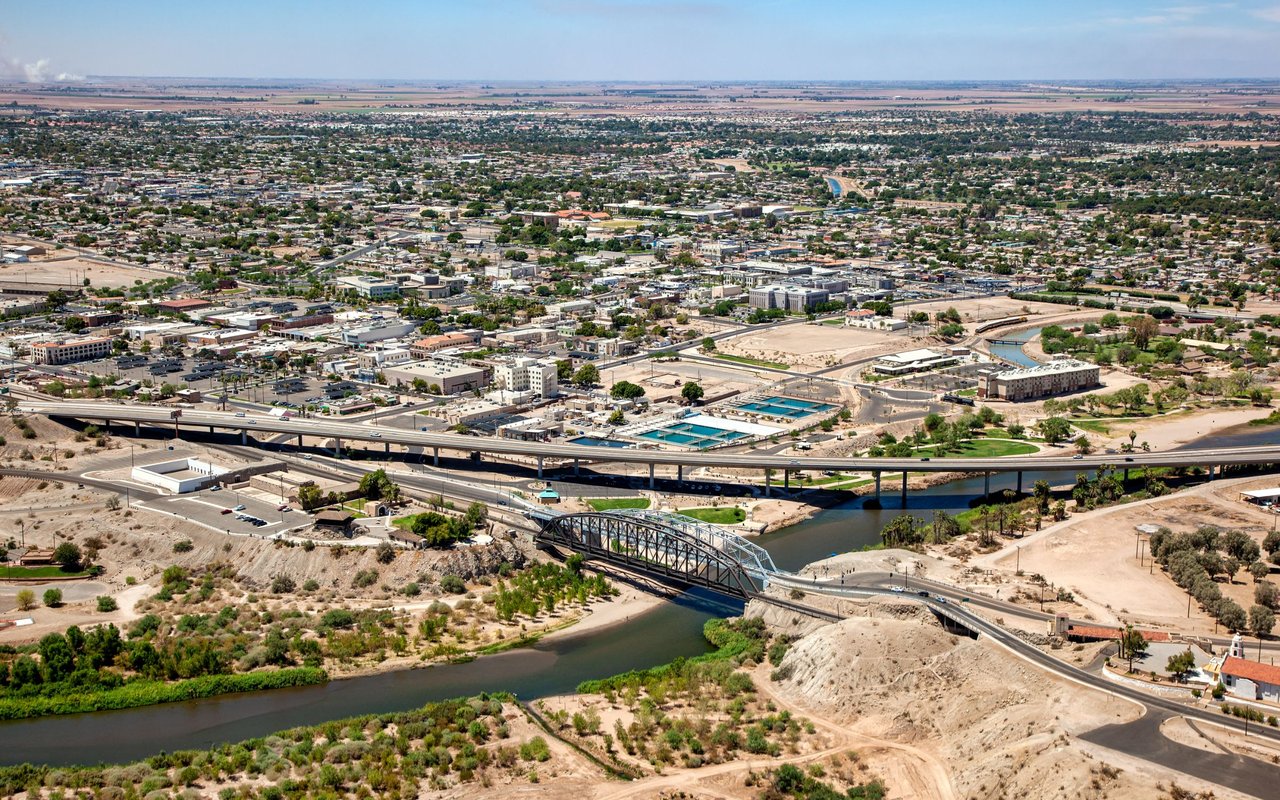
Most people in Yuma know the loose shape of lettuce season. Fields go green sometime in the fall, trucks show up on the roads, and by the time Yuma Lettuce Days rolls around at the University of Arizona Yuma Agricultural Center's Valley Farm in late February or early March, the whole town treats it like a finish line. That festival is the version of the season most residents actually experience: tastings, a farm tour on the open-air YACmobile, a night out downtown.
But the festival isn't the season. It's the tail end of one, and this past winter already showed how fast that tail end can get cut short.
The Season That Runs on Heat, Not a Date
The reason Yuma grows leafy greens when the rest of the country can't comes down to timing two growing windows around the sun. The University of Arizona Cooperative Extension lays it out plainly: Yuma runs a cool-season cycle from September through February for crops like lettuce, spinach, and broccoli, then flips to a warm-season cycle from March through August for tomatoes, melons, and other fruiting crops. Lettuce doesn't tolerate heat. Once temperatures climb, the plant bolts, the leaves turn bitter, and the crop that was fine last week is unsellable this week.
That single fact explains why nobody, including the growers themselves, can hand you a fixed start or end date for the season. The window opens and closes on soil and air temperature, not a spot on the calendar.
What Happened at the Back End This Past Winter
An AZFamily report described growers racing the clock in late February 2026. John Boelts, co-owner of Desert Premium Farms, told AZFamily that temperatures had pushed into the 90s earlier than usual for that point in the season, a stretch that followed a fall with nearly three times the area's normal rainfall. Crews shifted to starting as early as 4 a.m., with plans to move some cutting to nighttime hours entirely, because heat concentrates the bitter latex sap in lettuce and fades its color fast.
"Once we cut a lettuce, it's important to get it in the cool chain quickly," Boelts said in the AZFamily report, describing the tight window between a field cut and a truck-ready pallet.
The AZFamily report on this was filed out of Wellton, one of the farm towns east of Yuma where growers like Boelts work the fields. His cut lettuce needs a 35 to 45 minute drive to reach a local cooler before it can be packed and shipped, which means the entire operation is built around minutes, not days. When heat arrives ahead of schedule, that margin disappears fast, and so does the harvest window.
The Front End Has Done This Before, Too
The back end isn't the only side of the season that moves. In November 2023, both AZFamily and KYMA covered a harvest that started earlier than growers expected because October temperatures ran warmer than normal, speeding up how fast the lettuce matured in the field. Grower Matt McGuire, interviewed by KYMA that same month, said the season was going smoother than the year before, when an early October storm had dumped several inches of rain and made planting difficult. His advice to residents was straightforward: watch for ag vehicles and field trucks on the road for the rest of the season, because the semis carrying produce out of town add up fast once harvest gets underway.
Put the two data points together and the pattern is the mechanism, not the date. Warm falls pull the start earlier. Warm late winters push the end earlier. Both ends of Yuma's growing season answer to temperature, and 2026 already showed how much that can move on one side. There's no reason to assume this fall's start will land on the traditional November mark either.
What Peak Season Actually Looks Like on the Ground
When the harvest is fully underway, the scale is hard to overstate. Yuma County is responsible for roughly 90 percent of the leafy greens grown in the United States between November and March, according to the Yuma County Chamber of Commerce. The region runs nine salad-processing plants, each capable of handling more than two million pounds of lettuce a day during peak production, backed by 23 cooling plants built to bring truck-sized loads of vegetables down to shipping temperature in under half an hour. AZFamily reported that more than a thousand truckloads of vegetables leave Yuma every single day once harvest is in full swing.
Here's a rough sketch of how the season unfolds once it starts moving:
| Stage | What's Happening | Typical Timing |
|---|---|---|
| Cool-season planting | Fields shift from summer fallow to lettuce, spinach, broccoli | September |
| First harvest crews | Cutting begins once soil and air temps cooperate | Traditionally November, sometimes earlier |
| Peak processing | Full crew rotations, 1,000+ truckloads leaving daily | December through February |
| Yuma Lettuce Days | Public festival at the UA Yuma Ag Center Valley Farm | Late February or early March |
| Season-ending heat | Harvest accelerates, then stops as temperatures climb | As early as late February in warm years |
Notice where the festival sits on that table. It's not the opening act. It's closer to the closing one, timed for a window when the crop is often still being pulled but the season's days are already numbered.
Watching for the Actual Signal
If you live in Yuma and want a better read on the season than "sometime in the fall," the fields themselves are the more reliable signal than any date on a wall calendar. The stretches of open land toward Somerton, San Luis, and Wellton are where the shift shows up first, turning from dust and stubble to the deep green rows that define Yuma's winter identity. Once that shift happens, the ramp to full truck volume tends to move quickly rather than build gradually. A grower can go from a handful of crews to the kind of traffic McGuire described, caravans of semis working the roads day and night, in the span of a couple of weeks once the temperature cooperates.
A few things worth keeping in mind heading into this fall:
- There's no fixed calendar date to circle. Start timing has moved earlier in years with warm Octobers, and there's no structural reason this year would default back to the traditional November mark.
- Once it starts, it moves fast. The jump from quiet fields to daily truck convoys tends to happen over a couple of weeks. Cut lettuce has to hit a cooler within that same-day window Boelts described.
- Lettuce Days in February is a good marker for how far along the season already is, not a countdown to when it begins.
- If you're driving routes near the agricultural areas outside town, especially early mornings and after dark, expect more field equipment and produce trucks sharing the road as the season builds.
None of this changes the reason people already like living here. Yuma's identity as a producer of the country's winter greens has been true for decades, and it's one of the quieter threads running through daily life in this area, from the drive to work to the late-summer wait for the first fields to flip. Understanding how that season actually moves, rather than assuming it follows a fixed script, is the kind of thing that only shows up if you've been paying attention to it year over year.
That's the same approach the Fontanes team brings to reading this market day to day. Watching how conditions shift on the ground, rather than relying on the version everyone already assumes, is what makes local knowledge worth something. If you're curious what that same close attention looks like applied to your own property or a home you have your eye on in Yuma, the Ruben Fontanes team is a call away.