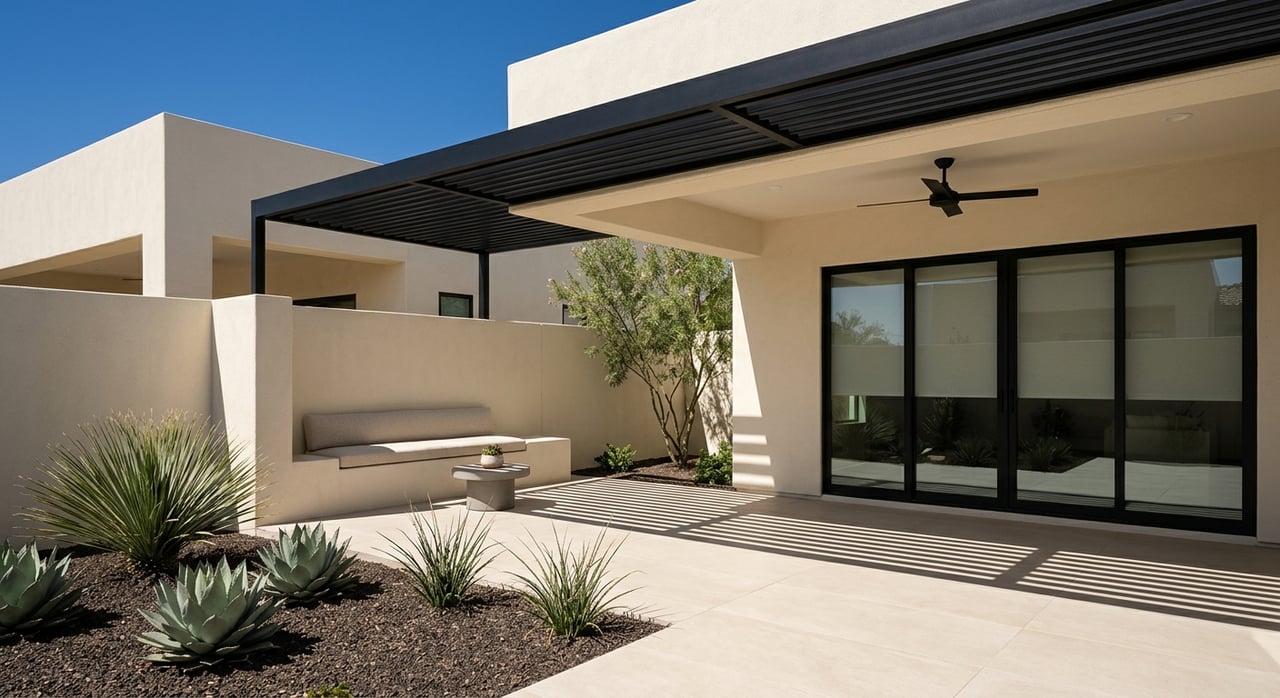
Wondering what home features actually make sense in Yuma, not just look good in listing photos? In a market where extreme sun, long cooling seasons, and water-wise living shape daily life, smart design choices can make a real difference in comfort, upkeep, and future resale appeal. If you are buying in Yuma, it helps to know which desert-friendly details buyers consistently value and why they matter. Let’s dive in.
Why desert design matters in Yuma
Yuma is not a place where design is only about style. NOAA climate normals for Yuma show a mean annual temperature of 76.0°F, just 3.28 inches of annual precipitation, 63 days each year with highs of 100°F or more, and 119 days with highs of 90°F or more.
That climate puts comfort and efficiency front and center. In practical terms, many of the most appealing home features in Yuma are the ones that help reduce heat gain, protect outdoor living areas, and cut back on water use.
Window features buyers notice
Windows do a lot of heavy lifting in a desert home. In Yuma, buyers often respond to features that help block intense sun, reduce glare, and support lower cooling demands during the hottest months.
The U.S. Department of Energy recommends low solar heat gain coefficient windows in warm climates, along with low-e coatings, proper installation, and strong air sealing. Those features are especially useful in a place like Yuma, where summer mean daily highs are above 100°F in July, August, and September.
Prioritize shade on east and west windows
East- and west-facing windows tend to bring in more heat and glare. That makes exterior shading a practical upgrade, not just a design extra.
Awnings, overhangs, solar screens, and exterior blinds can all help. According to DOE guidance, awnings can reduce solar heat gain by up to 65% on south-facing windows and up to 77% on west-facing windows.
Look for better daylight placement
Window placement can also shape how a home feels throughout the day. DOE guidance notes that north-facing windows usually provide more even light with less glare and very little unwanted summer heat gain.
That means a well-designed Yuma home often feels brighter and more comfortable without fighting the sun. If you are touring homes, pay attention to whether the natural light feels soft and usable or harsh and overheated.
Don’t overlook window coverings
Even with upgraded windows, interior coverings still matter. Tightly installed cellular shades can reduce unwanted solar heat through windows by up to 60%.
That makes them a simple feature buyers tend to appreciate. They support comfort, privacy, and day-to-day energy savings without adding much maintenance.
Cool roofs make sense here
In Yuma, the roof takes a beating from the sun. A cool roof is one of those features that may not be flashy, but buyers often understand the value quickly once they hear what it does.
DOE says cool roofs reflect more sunlight, can stay more than 50°F cooler than conventional roofs on sunny summer afternoons, and deliver their greatest cooling savings in hot climates. In a desert market, that can translate into a more comfortable home and less strain on cooling systems.
Flooring that fits the climate
Some flooring choices simply make more sense in Yuma than others. Hard-surface materials like tile, stone, and concrete tend to align well with desert living because they are durable and work well with long cooling seasons.
DOE identifies concrete, brick, stone, and tile as thermal-mass materials. In cooling season conditions, those materials can help absorb heat from warm indoor air, which supports a more stable indoor environment when paired with strong sun control.
Why tile stays popular
Tile remains a favorite for a reason. It is durable, easy to clean, and well suited to the dusty, sunny conditions common in Yuma.
From a resale perspective, buyers often see tile and similar hard surfaces as practical and low-hassle. That matters in a market where climate-smart ownership is a real selling point.
Outdoor living is a major plus
In Yuma, outdoor space is not just a bonus feature. It is part of how many buyers imagine using the home, especially when patios, shade structures, and seating areas are designed to stay more usable in warm weather.
This is where covered patios, awnings, and purposeful shade design really stand out. DOE notes that awnings can also shade outdoor living spaces, which makes them especially relevant for desert homes.
Covered patios add everyday value
A deep patio cover or shaded sitting area can make a big difference in how often you use the backyard. It can also help nearby walls and windows avoid direct sun exposure during peak heat.
For buyers, that combination of function and comfort is easy to understand. A home that supports outdoor living without constant sun exposure often feels more complete.
Shade landscaping helps too
Landscaping can do more than improve curb appeal. DOE says well-positioned trees, shrubs, and vines can provide shade, reduce surrounding air temperatures, and even help lower household energy use.
DOE also reports that shade from landscaping can reduce surrounding air temperatures by as much as 6°F, and the air under trees can be as much as 25°F cooler than the air above nearby blacktop. In a place like Yuma, that kind of cooling support can make outdoor areas feel much more inviting.
Water-wise landscaping matters to Yuma buyers
Low-water landscaping is not just a trend in Yuma. It lines up with how the city encourages residents to manage water use and maintain desert-appropriate yards.
The City of Yuma says about 70% of residential water use is tied to turf and landscape irrigation. The city encourages desert landscaping, drought-tolerant plants, and drip irrigation, and its landscape standards call for plant selection from the city’s recommended list, xeriscape designs that account for microclimates and hydrozones, and a permanent water-efficient underground irrigation system with automatic valves.
Xeriscape does not mean bare gravel
One common misunderstanding is that xeriscape means a yard with only rock and cactus. Yuma’s guidance makes clear that xeriscape is not limited to cacti, boulders, and gravel, and it does not mean zero water.
That is good news for buyers who want a yard that looks finished and intentional. A strong desert landscape can still include shade, color, structure, and seasonal interest while using water more carefully.
Focus on south and west exposures
Arizona Cooperative Extension notes that the south- and west-facing sides of a home are the hottest exposures. It also states that shade plants on those sides can reduce temperatures by several degrees.
That makes strategic planting especially valuable in Yuma. If you are comparing homes, look for yards that work with the sun instead of fighting it.
Desert-friendly features can support resale
Many of the same features that help you now can also make a home easier to market later. Buyers tend to recognize value in homes that feel comfortable, manageable, and aligned with the local climate.
In Yuma, that often means features such as shaded windows, covered patios, durable flooring, cool roofs, and water-wise landscaping. These details signal lower hassle and more practical ownership, which can matter when it is time to sell.
Local ordinance also notes that trees provide environmental, aesthetic, safety, and economic benefits and that trees are known to increase property values. When shade and desert-smart design come together, the result is often a home that feels both livable and future-ready.
What to look for when touring homes
If you are buying in Yuma, it helps to walk into each showing with a clear checklist. A beautiful finish package matters, but climate-smart design often tells you more about how the home will live day to day.
Look for features like these:
- Low-e windows or low solar heat gain windows
- Exterior shading on east- or west-facing windows
- Cellular shades, awnings, or other heat-blocking window coverings
- Cool roof materials or reflective roofing features
- Tile, stone, or concrete flooring in key living areas
- Covered patios or shaded outdoor seating areas
- Drought-tolerant landscaping
- Drip irrigation or other water-efficient irrigation systems
- Shade trees or plantings placed along south and west exposures
Why buyers love these upgrades
The appeal comes down to three things: comfort, maintenance, and long-term practicality. In Yuma, homes that work with the desert climate tend to feel easier to own.
That is why desert-friendly design keeps showing up as a buyer favorite. These features are not about chasing trends. They are about living better in the market you are actually buying in.
If you are weighing homes in Yuma, Somerton, San Luis, Wellton, or nearby areas, paying attention to these details can help you choose a property that fits both your lifestyle and the local climate. When you want local guidance on which features add real value in this market, connect with Ruben Fontanes.
FAQs
What desert-friendly home features matter most to Yuma buyers?
- Buyers in Yuma often notice shaded windows, low-e or low solar heat gain windows, cool roofs, hard-surface flooring, covered patios, and water-wise landscaping because these features support comfort, lower upkeep, and better everyday use in a hot, dry climate.
Why is landscaping such a big deal for homes in Yuma?
- The City of Yuma says roughly 70% of residential water use is tied to turf and landscape irrigation, so buyers often value drought-tolerant plants, drip irrigation, and xeriscape design that fits local water-conservation goals.
Are tile floors better for homes in Yuma, AZ?
- Tile, stone, and concrete are often strong choices in Yuma because DOE identifies them as thermal-mass materials, and buyers also tend to like their durability and lower-maintenance feel in desert conditions.
Do cool roofs help in Yuma’s hot climate?
- Yes. DOE says cool roofs reflect more sunlight, can stay more than 50°F cooler than conventional roofs on sunny summer afternoons, and offer the greatest cooling savings in hot climates like Yuma.
What should you check first when touring a home in Yuma?
- Start by looking at sun exposure, window shading, roof type, patio coverage, and the landscaping setup, because those features can have a major impact on comfort, energy use, and maintenance in Yuma’s desert environment.
